1. Arrival in a City of Ancient Stones
The early morning light streamed over the Miño River as I stepped onto the quiet streets of Ourense. A gentle mist curled above the water, casting a veil across the medieval bridges and baroque facades. There’s a silence to mornings in this city, an unhurried rhythm that seems carved from the same stone as its Romanesque churches. This was not a place of spectacle; it was a place of layers, each brick and bathhouse whispering a story etched deep into Iberia’s past.
Before the sun rose too high and the aroma of Galician pastries began drifting from bakery doors, I traced the Roman outlines that still map this city’s bones. Ourense is more than scenic hillsides and thermal waters—it is a mosaic of antiquity waiting to be explored, one step at a time.
2. Crossing the Roman Bridge: Footsteps on Granite Memory
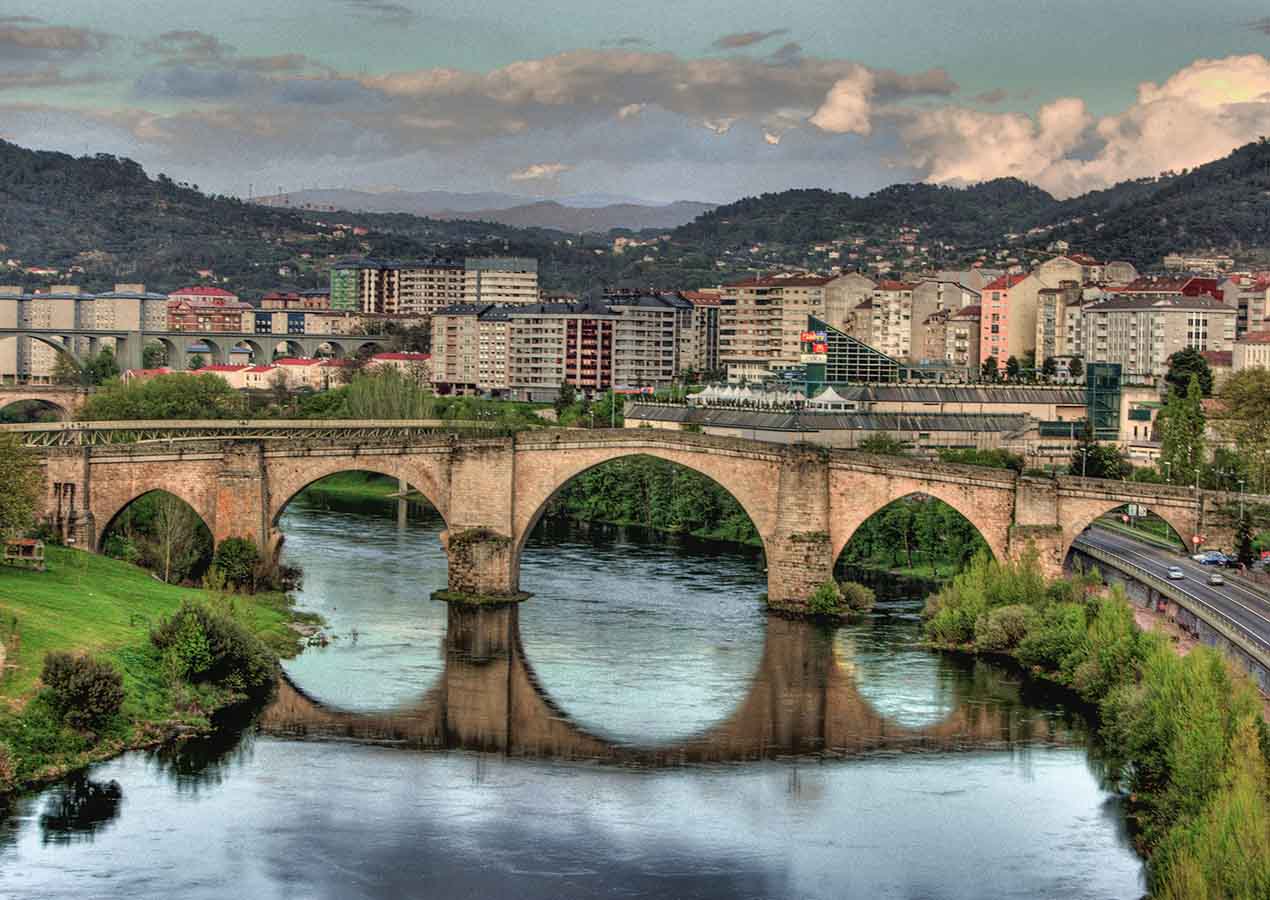
The Ponte Romana, or Roman Bridge, spans the Miño like an outstretched arm between centuries. Its seven arches and sweeping curve are a testament to Roman engineering prowess. Though rebuilt and restored across eras, its foundations date back to the first century AD. I walked slowly, each footfall echoing against centuries of cartwheels, marching boots, and pilgrim sandals.
Standing at its midpoint, I leaned against the stone balustrade. The view downstream captured the bridge’s elegant symmetry, with water reflecting its arch like a perfect twin. Beneath lay the pulse of the city—the river that nourished the Roman settlement of Auriense, which once thrived on gold extraction and strategic geography.
From this vantage, Ourense’s historic center rises gently uphill, crowned by towers and chimneys, its skyline punctuated by bell gables and ancient rooftops. To the Romans, this would have been the frontier of their Hispania empire; to me, it was a living museum.
3. Plaza Mayor: The Beating Heart of Civic Legacy
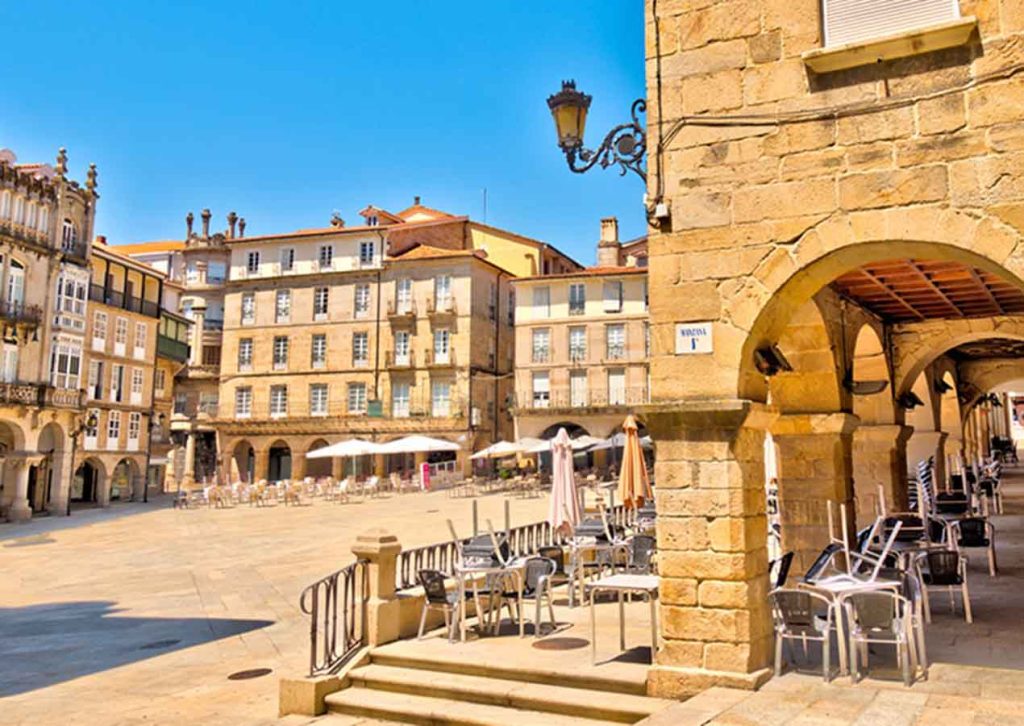
After crossing the bridge, I navigated narrow lanes lined with Renaissance stonework and shuttered balconies until arriving at Plaza Mayor. This sloping square is rare—its uneven incline is not only tolerated but celebrated. Locals sipped coffee at sidewalk cafés, some seated at slight angles as though gravity were pulling them into the 12th century.
The Casa Consistorial, a neoclassical town hall, dominates the square with modest authority. Its arcaded ground floor once provided shelter for merchants and messengers. Ourense’s civic heart has remained in motion here for over a thousand years—public proclamations, holy processions, and political drama have all played out beneath these arches.
I sat at a wrought iron table with a café solo and sketched the skyline with my eyes. Every corner offered a clue: Latin inscriptions hidden in stone facades, reused Roman columns embedded in newer structures, a city still in dialogue with its origins.
4. The Cathedral of San Martiño: Fortress of Faith and Antiquity
Towering above the town square stands the Catedral de San Martiño, a cathedral begun in the 12th century but rooted in a Romanesque foundation. From the outside, it appears as a cross between a fortress and a shrine, its thick walls built to withstand not just the passage of time but also centuries of political and ecclesiastical upheaval.
Inside, a half-light filtered through the Gothic rose window, coloring the air with pale gold and dusty blue. Chapels branched off like medieval tributaries, each sheltering saints, bishops, or apostles. I lingered before the Portico del Paraíso, a breathtaking polychrome portal inspired by Santiago de Compostela’s more famous version.
But beneath the visible grandeur lay older stones. It is believed the cathedral’s crypts incorporate parts of the original Roman forum. Some columns remain, their capitals worn but decipherable—evidence that Christian worship rose, quite literally, atop imperial foundations.
5. The Thermal Springs: Rome’s Aquae Still Flow
No Roman city would have been complete without its thermal baths, and Ourense delivers in abundance. I walked southward along the riverbank to reach As Burgas, a cluster of hot springs bubbling at street level in the heart of the old town. Steam rose lazily into the air, softening the sharp lines of the surrounding architecture.
The Romans were the first to harness these geothermal gifts, building thermae that likely extended far beyond today’s visible pools. Archaeological digs in the area have uncovered pipes, tiles, and even carved basins suggesting a large, communal bathing complex.
Locals dipped their hands into the 65°C waters, murmuring about minerals and healing. Behind the fountain, a modern bathhouse offers a stylized version of what Rome began. The smell of sulfur lingered gently on the breeze, a scent unchanged since toga-clad citizens once soaked under the Galician sun.
6. Museo Arqueolóxico Provincial: Relics of Empire
Tucked behind the cathedral in the former Pazo Episcopal (Episcopal Palace) is the Museo Arqueolóxico Provincial de Ourense. This museum offers a chronological unraveling of the region’s history, from prehistoric settlements to Roman conquest and Visigothic adaptation.
Among its most striking pieces are miliarios—massive Roman milestones carved with inscriptions that once lined the Via Nova, a Roman road connecting Braga (Portugal) to Astorga (Spain). These mile markers remind one that Ourense wasn’t isolated; it was a node in a grand imperial web stretching from Britannia to the Middle East.
Other finds include mosaics, amphorae, Roman jewelry, and even the remains of an oil press. The stone faces of Roman gods and imperial busts stared back from their displays, neither smiling nor frowning, as though reserving judgment on modernity itself.
7. The Hidden Baths of Outariz: A Ritual Rediscovered
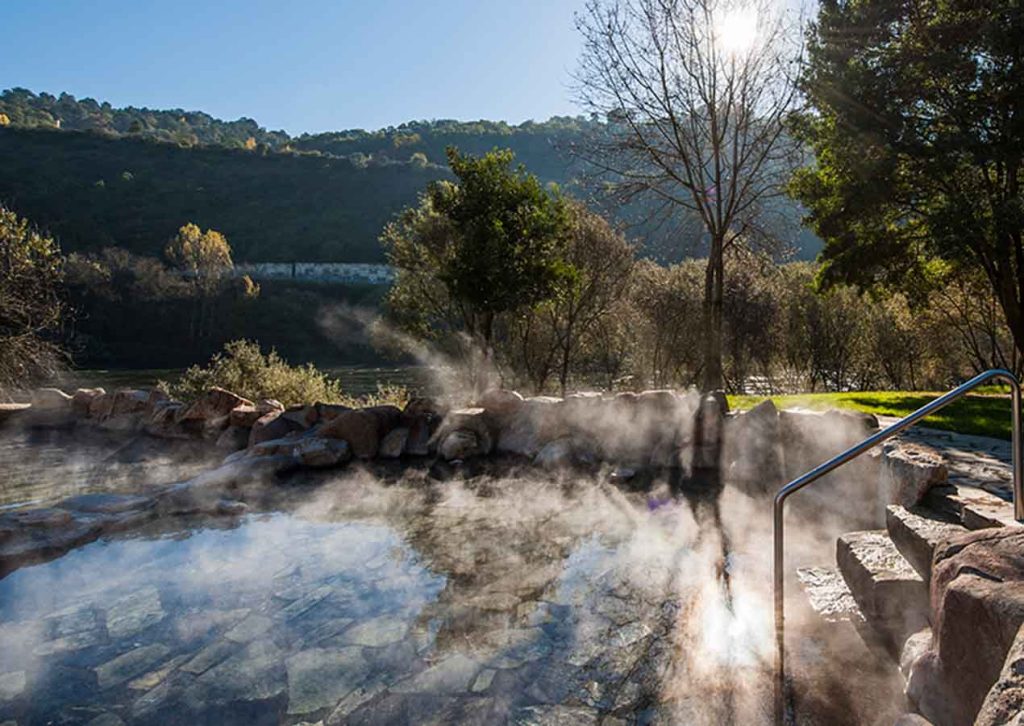
A longer walk—or a short tram ride—led me further along the Miño to Outariz, where open-air thermal pools sit framed by bamboo groves and pebble paths. While modern in appearance, the ritual remains deeply Roman: alternating between hot and cold baths, resting in contemplation, and watching the steam rise like incense to the sky.
Here, the conversation among bathers often gives way to quiet reflection. The baths are social, yet meditative—another layer of continuity from antiquity. Roman coins have been found in nearby soil layers, suggesting these waters were once paid homage with offerings to Neptune or other local deities.
I dipped into the hottest pool and gazed upriver, imagining centurions and senators doing precisely the same two thousand years ago. The idea is less fanciful than it sounds. The bones of their roads, walls, and rituals remain intact under Ourense’s surface.
8. A Walk Through Vía Nova: Stones That Once Guided Empires
Fragments of the Roman road known as Vía Nova still exist near Ourense, particularly in the area of A Cigarrosa, where a Roman bridge once carried traffic between Braga and Astorga. Though much of the original path lies buried or absorbed into modern roads, segments of its flagstones are visible in the rural outskirts.
I ventured out by car to see one such stretch, following vague directions and the occasional brown historical sign. Amid olive groves and stone barns, the road appeared—uneven, moss-lined, and marvelously solid. Walking it produced a kind of silence more powerful than any speech. The grooves of carts long gone were etched into the surface like fingerprints on time itself.
9. Church of Santa Eufemia: A Baroque Canvas with Roman Echoes
Back in the city, the Iglesia de Santa Eufemia dominates one of Ourense’s quieter squares. Though Baroque in style, its location overlays former Roman structures. Restoration work uncovered Roman remains beneath the altar, and some of the church’s columns appear repurposed from earlier buildings.
Inside, cherubs cavort among stucco flourishes, but beneath the ornamentation lies a foundation of re-used Roman ashlar. The duality between the flamboyant and the foundational is a microcosm of Ourense itself: past and present locked in a long embrace.
10. The Roman Legacy in Local Traditions
Beyond the ruins and stones, the spirit of Roman Ourense lingers in daily rituals. Locals speak of “going to the baths” with reverence, almost as a rite. Public fountains, often fed by ancient aqueducts, provide refreshment with the same clarity as in antiquity. Dishes at traditional eateries often involve slow-roasting, olive oil, and ingredients known to Roman kitchens: pork, lentils, garlic, and herbs.
Even in festivals, echoes persist. The annual Festa do Boi, with its procession of bulls and mock Roman soldiers, blends Celtic, Christian, and imperial symbols into a celebration that’s as much history as it is spectacle.
11. A Final Glimpse from the Cloisters
The sun dipped low as I returned to the cloisters behind the cathedral, the shadows of the columns growing longer across the flagstones. Swallows darted through the open arches, calling out as if in conversation with the past. Light fell in golden slants, illuminating weathered carvings and the gentle wear of generations.
There, under that quiet arcade, stood the essence of Ourense. Not a monument, not a ruin, but a space still breathing with the past. The city does not preserve history under glass—it wears it like a second skin.
As evening bells rang from the tower, I stood still and listened. Roman footsteps, barely audible beneath the rustling trees, still echoed somewhere in the rhythm of the stones.