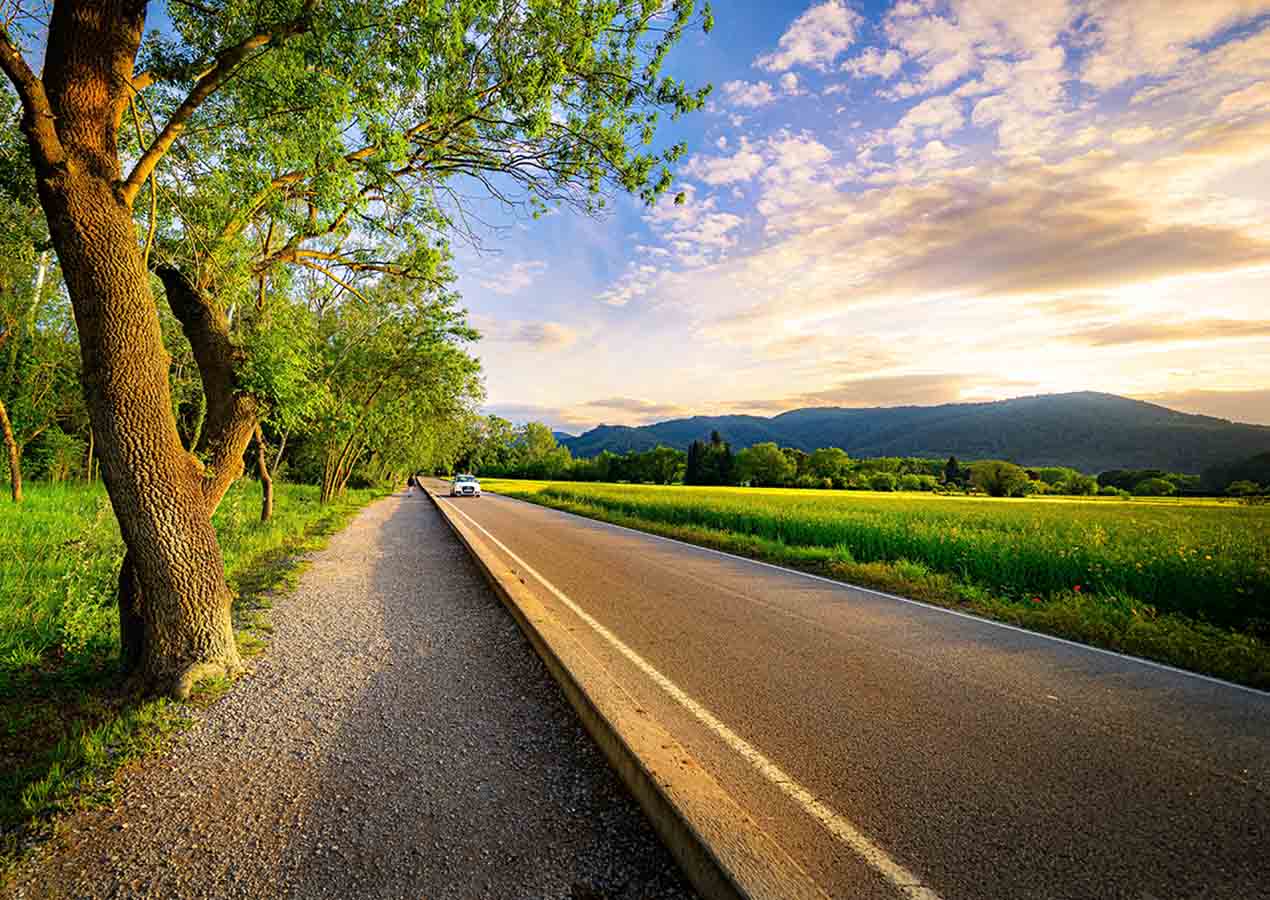
The sky still held the faint blush of dawn when I stepped outside, a low mist clinging to the terracotta rooftops of Pontevedra. The air had that distinctive Atlantic crispness—fresh and slightly briny—so characteristic of Galicia. The city was just stirring awake, its cobbled lanes whispering secrets from centuries past. As I unlocked the car, I paused to breathe in the scent of eucalyptus and stone, ready to trade the charm of Pontevedra for the rugged interior of Ourense.
This journey would not be rushed. The drive between Pontevedra and Ourense spans about 100 kilometers, but the roads through the Galician countryside demand—and deserve—a lingering pace. There are multiple routes one might take, each with its own personality. I had studied the maps and planned a meandering course that would allow me to follow the rivers, skirt the mountains, and chase the soft drama of Galicia’s natural beauty.
1. Leaving Pontevedra: Early Morning Shadows and Forest-Lined Roads
The first few kilometers were familiar. I eased out of the city along the N-541, a national road that leads inland, climbing gently into the hills. Traffic was sparse, and sunlight filtered through the tall pines that line this route, dappling the asphalt with golden patches. The elevation began to change gradually, and with it, so did the landscape. City sprawl gave way to open fields where the morning fog hovered like a silk shawl over the ground.
As the car climbed into the hills around Cotobade, the views opened up. Terraced farms clung to the slopes, and small stone villages, seemingly untouched by modernity, passed by my windows like scenes from a painted scroll. I stopped near Carballedo to stretch my legs and admire a small Romanesque church nestled in the greenery. Its bell tower cut a sharp silhouette against the rising sun, and the only sounds were birdsong and the rustling of chestnut leaves.
2. River Lérez and the Magic of Water
Driving further east, the road began to hug the curves of the River Lérez. The river, born in the mountains of Forcarei, shimmered to my left, occasionally disappearing behind thick groves only to reappear with a glint like hammered silver. Galicia is a land of water—springs, streams, rivers—and the Lérez is one of its quieter marvels.
In the town of Cerdedo, I pulled over near an old stone bridge spanning the river. It’s easy to miss places like this when driving straight through, but something about the weathered masonry and moss-covered stones invited a pause. I sat on the bank for a while, watching the river slide past. Locals believe that rivers in Galicia carry more than water—they carry memory, and possibly even a touch of magic.
3. Ascending Into Serra do Candán: A Windy Path Through Time

The N-541 begins its ascent into the Serra do Candán not far beyond Cerdedo. Here, the road winds with increasing determination. The landscape transforms dramatically—rolling green hills give way to rugged outcrops and wide swaths of heather and gorse. The trees thin out, replaced by scrubland and highland grasses.
I lowered the windows to breathe in the cold, clean air of the uplands. The wind here has a particular sound, sharper and more ancient somehow. It echoed in the ravines and whistled through the cracks in dry stone walls that lined the path. This part of the drive demands attention—not only for its tight curves but for its sheer beauty. Every turn reveals a different vista: a waterfall tumbling in the distance, a shepherd leading goats across a slope, clouds dragging shadows across the earth like theatre curtains.
There are few settlements in this stretch, but I stopped in Lamasgalán, a village of perhaps a dozen houses, most of them shuttered against the wind. An elderly man sat in front of one, smoking a pipe carved from chestnut wood. We exchanged greetings, and I asked about the route ahead. He warned me about the next series of bends and pointed out a shortcut that led to a nearby mirador—an overlook that offered panoramic views of the valley below. I took his advice. The view from the ridge was sublime: hills cascading like waves, pine forests rolling down into dark creases, and in the distance, the beginning of the Ourense province.
4. The Descent Toward O Carballiño: Bread, Wine, and Simplicity
Crossing into the province of Ourense, the road begins a gentle descent. The landscape softens. Vineyards appear on the hillsides, and the climate grows a touch warmer, influenced by the river valleys and the natural thermal activity of the region.
O Carballiño is a small town, but it holds a big reputation for two things: bread and pulpo (octopus). I arrived just in time for the late morning bustle. The scent of baking bread hung in the air like a siren’s song. I parked near the Praza Maior and followed my nose to a bakery where the loaves were still warm from the oven. The crust was dark and crackled under my fingers, the crumb inside elastic and slightly sour. No butter, no jam—just bread and strong local coffee.
A few streets over, the market was in full swing. Vendors sold everything from honey to handmade clogs, and in the central square, a man stirred an enormous copper pot filled with octopus, his hands red from the paprika-laced steam. I waited my turn, took a plate, and found a bench in the sun. The flavors were humble and perfect: sea-salted octopus, boiled potatoes, olive oil, and smoked paprika, paired with a glass of Ribeiro wine from a nearby vineyard.
5. Following the Miño: A River That Shapes the Soul
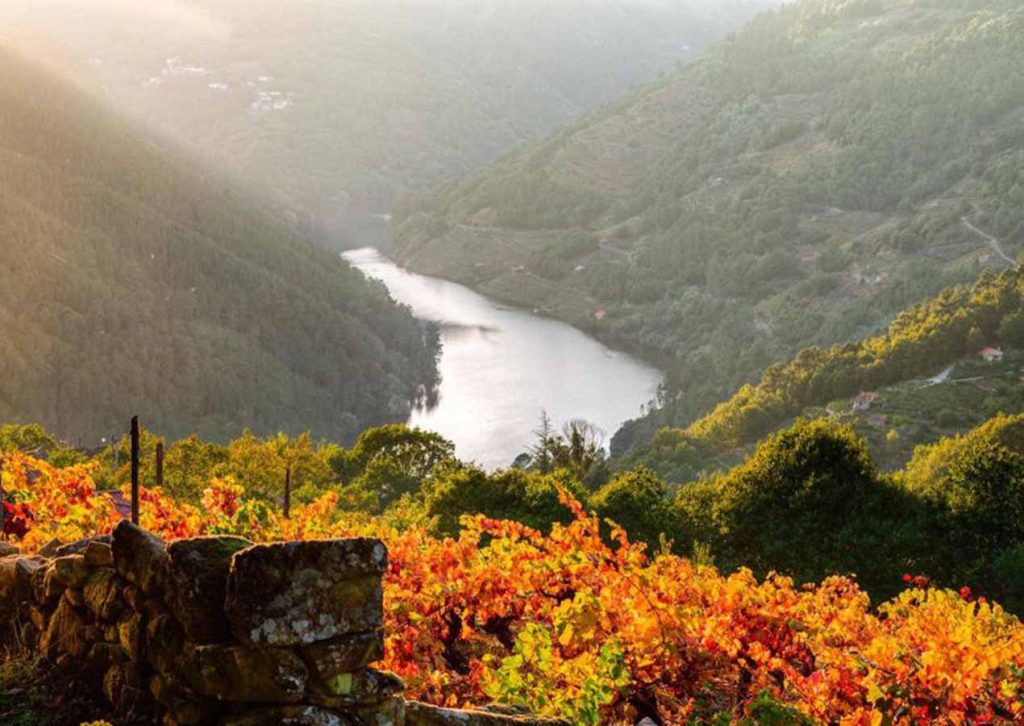
From O Carballiño, I continued southeast, following the signs for Ourense. The road gradually draws closer to the Miño River, the longest river in Galicia. Unlike the youthful Lérez, the Miño feels ancient and authoritative, like a river that knows its importance and expects you to respect it.
Near Pazos de Arenteiro, I took a small detour along a narrower road that traced the riverbank. This stretch was a mosaic of tiny vineyards, olive groves, and thermal springs. The Miño’s influence here is unmistakable: it nourishes the land, regulates the climate, and has shaped settlement patterns for centuries. Roman bridges span its breadth, and monasteries cling to its banks, their stones blackened by time and weather.
One of the most memorable moments came when I stopped near Ribadavia, a town known for its medieval Jewish quarter and deep winemaking heritage. I wandered through its labyrinthine lanes, tasted aged godello wine in a cellar cut into the hillside, and watched children play in the same plazas where merchants once sold spices, cloth, and stories from faraway lands.
6. Entering Ourense: Stone, Steam, and the Glow of Evening
The final approach to Ourense carries a sense of arrival. The city rises slowly along the curve of the river, a collection of slate roofs and golden granite facades. Traffic picks up as the road enters the outskirts, but the sense of continuity remains. The Miño continues its journey through the city, now joined by bridges ancient and modern. Above it all, the old Roman bridge—the Ponte Vella—stands proud, a relic from the first century that has watched more than two millennia of history pass beneath its arches.
Driving into the city center required patience. Narrow streets and strict signage demand attention, but they also reveal the soul of the city. Steam rose in curls from the thermal fountains near the Burgas—the hot springs that gave Ourense its name and its earliest reputation. People sat around the pools with towels and relaxed expressions, soaking in the mineral-rich waters. There was a softness in the light, an amber glow that painted the buildings and made the stone seem to shimmer from within.
I found my hotel near the Praza do Ferro, parked the car, and stepped out once more into the streets. The city breathed differently than Pontevedra—warmer, heavier, more saturated with heat and time. The scent of roasted chestnuts and simmering stews floated on the air. Church bells tolled the hour.
The drive from Pontevedra to Ourense had not been long in terms of distance, but it had unfolded like an epic—a journey through layers of landscape, culture, and quiet revelation. The car, now resting beneath a chestnut tree, seemed to understand. And the road, with all its curves and secrets, still echoed faintly in my ears like a song not yet finished.